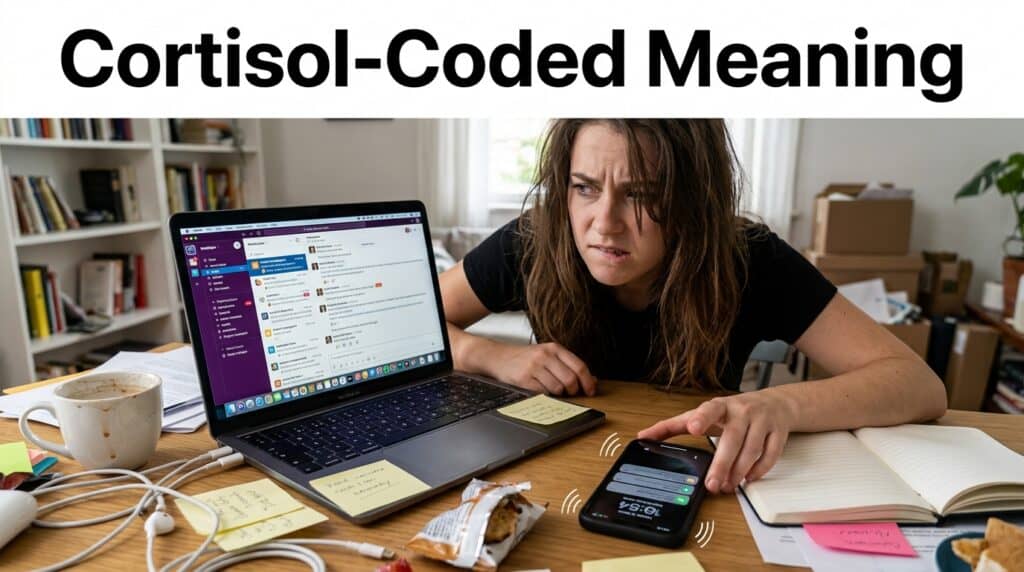
Someone posts a “calming” 5 a.m. routine with $400 candles, perfect lighting, and 12 steps — and you feel more stressed just watching it. That’s cortisol-coded content. Let’s break down what this wellness TikTok term actually means.
What Does “Cortisol-Coded” Mean?
Quick answer: “Cortisol-coded” describes something that looks calming or aesthetic on the surface but is actually stressful or anxiety-inducing underneath — like a perfect morning routine video that makes you feel worse about yourself. It critiques performative self-care culture with science-speak.
Full Definition
Cortisol-coded is a TikTok wellness slang term for content, environments, or situations that present a serene, low-stress facade while secretly spiking your cortisol (the body’s primary stress hormone). It’s used to call out performative relaxation that actually increases stress rather than reducing it.
Common Contexts
You’ll see “cortisol-coded” used in TikTok comments, Instagram captions, Twitter/X threads, and wellness discussions when someone is critiquing content that looks calming but is actually stressful — like influencer morning routines, aesthetic workspaces, or “relaxing” content that feels like pressure.
Alternate Spellings
Written as “cortisol-coded,” sometimes hyphenated or as “cortisol coded.” Occasionally paired with “high-cortisol” (stressed) or “low-cortisol” (calm) in broader wellness contexts.
How It’s Pronounced
Pronounced exactly as it’s spelled — “kor-ti-sol koh-ded,” five syllables.
Typical Tone
Almost always critical or self-aware — it’s meant to call out performative wellness culture, not genuine relaxation content. People use it to joke about stress disguised as self-care.
Origin and Evolution
When It Became Popular
The term emerged from TikTok wellness culture in late 2025-early 2026, building on the broader “cortisol spike” meme that started in early 2025. It went viral as a way to critique performative self-care content that looked calming but actually increased viewer stress through comparison or unrealistic expectations.
Platforms or Subcultures
It spread through TikTok, Instagram, and Twitter/X, particularly in wellness, mental health, and commentary content where creators critiqued performative relaxation culture. It’s also heavily used in group chats and DMs as a way to joke about stressful “calm” content.
How It Evolved Over Time
What started as a specific critique of influencer wellness content broadened into a general-purpose term for any stressful-looking aesthetic or environment. By 2026, it had stabilized as permanent internet slang, often referenced alongside “cortisol spike” and other stress-hormone memes.
Modern Usage and Examples
Critiquing influencer content
“This 5 a.m. routine with 12 steps and $400 candles is so cortisol-coded.”
Self-aware humor
“My to-do list is giving major cortisol-coded energy.”
Describing environments
“This aesthetic workspace is cortisol-coded — too perfect to actually relax in.”
Reaction to stress
“My inbox is cortisol-coded right now — 500 unread emails.”
Who Uses It?
“Cortisol-coded” is used heavily by Gen Z and Millennials, especially in wellness, mental health, and commentary spaces on TikTok, Instagram, Twitter/X, and everyday group chats. It’s also common in wellness and self-care content where creators critique performative relaxation culture.
Example Sentences
“Her whole bedroom aesthetic is cortisol-coded — too clean to actually live in.”
“This ‘relaxing’ Sunday routine has 15 steps. Cortisol-coded.”
“My group chat is cortisol-coded right now — everyone’s freaking out.”
Similar Slang Terms
- Girl dinner – another TikTok trend, describing low-effort meals; the opposite of cortisol-coded perfectionism.
- Aura farming – building up perceived coolness through impressive actions, sometimes cortisol-coded in its intensity.
- Cooked – exhausted, doomed, or in trouble; often the result of cortisol-coded content.
- Cortisol spike – the meme format that cortisol-coded builds on, describing sudden stress or secondhand embarrassment.
- Performative wellness – the classic, non-slang way of describing the same phenomenon cortisol-coded critiques.
Pop Culture, Memes, and Trends
Memes
“Cortisol-coded” memes often feature screenshots of overly perfect wellness content captioned “cortisol-coded” or “this is not relaxing, this is stress.”
TikTok Trends
Creators film “cortisol-coded vs. actually relaxing” videos showing the difference between performative wellness content and genuine low-effort relaxation.
Celebrity Content
Several wellness influencers and mental health creators have referenced “cortisol-coded” in posts and videos, often self-critically, helping normalize the term in mainstream wellness contexts.
Twitter/X Jokes or Instagram Captions
On X, “cortisol-coded” frequently appears in replies to stressful wellness posts, often with comments like “this is cortisol-coded” or “my cortisol just spiked watching this.”
Is “Cortisol-Coded” Safe to Use?
Yes, it’s completely casual and non-offensive as a critique of performative wellness culture. It’s widely used in wellness, mental health, and commentary content and casual conversation alike, though it can come across as dismissive if aimed at someone’s genuine self-care efforts rather than performative content.
Why It’s Popular
“Cortisol-coded” resonates because it names a universal experience — the stress of watching “relaxing” content that actually makes you feel worse. Its critical framing makes it a safe way to call out performative wellness without dismissing genuine self-care. That’s why it’s stabilized as permanent slang rather than burning out like typical viral trends.
So next time you see a “calming” routine that spikes your stress, just remember: that’s peak cortisol-coded. Keep exploring the world of slang, and who knows what other gems you’ll uncover!
Frequently Asked Questions
What does “cortisol-coded” actually mean?
It describes something that looks calming or aesthetic on the surface but is actually stressful or anxiety-inducing underneath — like a perfect morning routine video that makes you feel worse about yourself. It critiques performative self-care culture with science-speak.
Where did “cortisol-coded” come from?
The term emerged from TikTok wellness culture in late 2025-early 2026, building on the broader “cortisol spike” meme that started in early 2025. It went viral as a way to critique performative self-care content that looked calming but actually increased viewer stress through comparison or unrealistic expectations.
What is cortisol?
Cortisol is the body’s primary stress hormone, produced by the adrenal glands. It regulates energy metabolism, blood glucose, immune function, inflammation, blood pressure, and the sleep-wake cycle. It’s not a toxin to be “detoxed” — it’s an essential hormone that follows a daily rhythm.
Can “cortisol-coded” be used for non-wellness things?
Yes — while it originated in wellness culture, it’s now used for any stressful-looking aesthetic or environment, from messy inboxes to chaotic group chats to overly perfect workspaces.