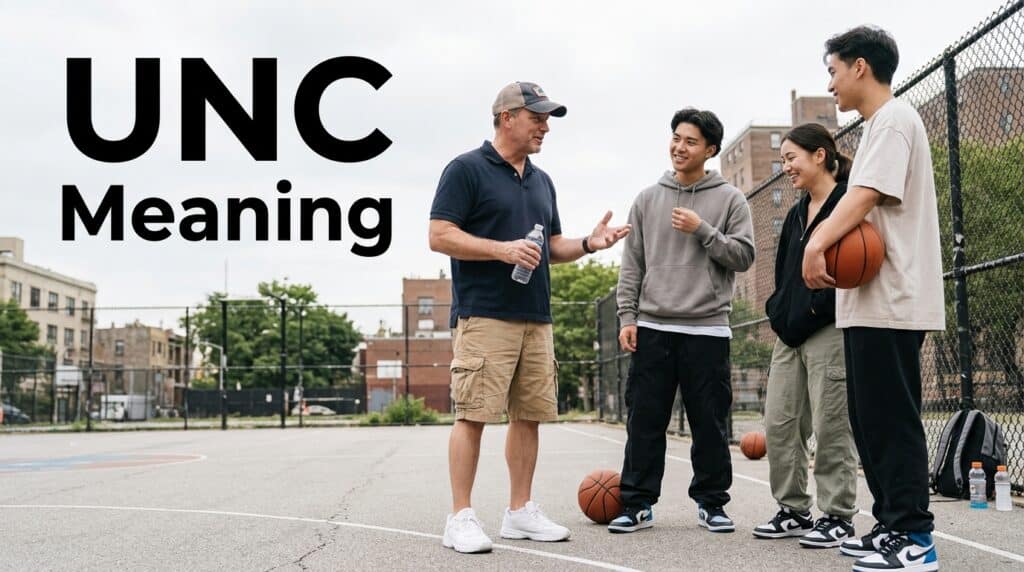
Someone makes a dad joke, wears “old man” clothes, or gets confused by a TikTok trend — and a Gen Alpha kid drops one word: “unc.” It’s not necessarily mean, but it’s definitely a gentle roast. Let’s break down what “unc” actually means and why it’s everywhere right now.
What Does “Unc” Mean?
Quick answer: “Unc” is short for “uncle” — Gen Z and Gen Alpha slang for an older person who’s uncool, out of touch, or just doesn’t get it. It can be playful teasing or mildly dismissive, depending on tone.
Full Definition
“Unc” is a shortened form of “uncle” used to humorously describe anyone older (or anyone acting older) and out of touch. While typically a light pejorative, it can also be affectionate depending on context and delivery.
Common Contexts
You’ll hear “unc” used in schools (directed at teachers), in family settings (teasing older relatives), and on social media when someone is acting outdated or “old” — like using Facebook unironically or not understanding a meme.
Alternate Spellings
Written as “unc,” sometimes capitalized as “Unc.” Often paired with “chopped” as “chopped and unc” (unattractive and old).
How It’s Pronounced
Pronounced exactly as it’s spelled — “unk,” rhyming with “funk” or “chunk.”
Typical Tone
Usually playful and light-hearted rather than genuinely hostile — more “OK boomer” energy than a serious insult. Can be affectionate when used for respected elders.
Origin and Evolution
When It Became Popular
“Unc” originated within African American Vernacular English (AAVE) as a shortened form of “uncle,” used for over two decades before the oldest Gen Alpha member was born. It was greatly popularized by Gen Alpha starting around 2021.
Platforms or Subcultures
The term spread through TikTok, Instagram, and everyday school settings, with teachers reporting students calling them “unc” when they’re confused by trends or act “old.” It’s also used in family settings and broader social media contexts.
How It Evolved Over Time
What started as a respectful term for older male figures in AAVE has evolved into a more general, often humorous label for anyone acting older or out of touch — regardless of actual age. The Guardian noted in 2026 that it’s “more playful than confrontational,” potentially indicating respect, familiarity, or light teasing rather than outright dismissal.
Modern Usage and Examples
Playful teasing
“He still uses Facebook unironically — total unc behavior.”
Self-deprecating
“I just turned 30 and I’m already accepting my unc status.”
Affectionate
“Unc always got wisdom, though — he’s the one who taught me that.”
Describing someone else
“Did you see his outfit? He’s reached full unc status at this point.”
Who Uses It?
“Unc” is used heavily by Gen Alpha and younger Gen Z, especially elementary and middle schoolers, in person at school and on TikTok, Instagram, and everyday group chats. It’s also used in family settings when teasing older relatives.
Example Sentences
“My teacher tried to do the latest dance trend and we all called him unc.”
“I caught myself saying ‘back in my day’ — I’ve officially become unc.”
“Timothée Chalamet celebrated his 30th birthday by embracing his unc status.”
Similar Slang Terms
- OK boomer – an older, more confrontational term for dismissing older generations, which “unc” has largely replaced due to its lighter tone.
- Dad energy – describes someone acting mature or “old” before their time, often overlapping with unc behavior.
- Cheugy – describes something outdated or trying too hard to be trendy, often applied to the same things labeled “unc.”
- Chola – a different aesthetic/identity term, but sometimes referenced in contrast to “unc” energy.
- Normie – describes someone mainstream or basic, sometimes overlapping with unc when the person is out of touch with current trends.
Pop Culture, Memes, and Trends
Memes
“Unc” memes often feature photos of celebrities or influencers doing something “old” (like using outdated tech or fashion) captioned “he’s one of them now” or “unc status confirmed.”
TikTok Trends
Creators film “signs you’ve reached unc status” videos, listing things like “you say ‘young people’ unironically” or “you still have a landline,” turning the term into a whole taxonomy of aging markers.
Celebrity Content
Timothée Chalamet publicly embraced his “unc status” on his 30th birthday, and Sabrina Carpenter has used the word to describe her record producer, helping normalize the term in mainstream contexts.
Twitter/X Jokes or Instagram Captions
On X, “unc” frequently appears in self-deprecating posts about aging, with users joking about reaching “unc status” after turning 25 or 30.
Is “Unc” Safe to Use?
Yes, it’s generally casual and non-offensive when used playfully among friends or family. That said, using it to mock someone’s actual age or genuine generational differences can come across as ageist or mean-spirited, so read the room before labeling someone “unc” in a serious context.
Why It’s Popular
“Unc” resonates because it captures a universal experience — that moment when you realize you’re no longer the youngest, most trend-aware person in the room — while giving it a name that’s more playful than confrontational. Unlike “OK boomer,” which felt dismissive, “unc” can signal respect, familiarity, or light teasing, which is why it’s crossed over so successfully into mainstream usage.
So next time you catch yourself saying “back in my day” or using Facebook unironically, just remember: you’ve probably reached unc status. Keep exploring the world of slang, and who knows what other gems you’ll uncover!
Frequently Asked Questions
What does “unc” actually mean?
It’s short for “uncle” — Gen Z and Gen Alpha slang for an older person who’s uncool, out of touch, or just doesn’t get it. It can be playful teasing or mildly dismissive, depending on tone.
Where did “unc” come from?
It originated in African American Vernacular English (AAVE) as a respectful term for older male figures, used for over two decades before Gen Alpha popularized it as a more general, humorous label around 2021.
Is “unc” always negative?
No — depending on delivery, it can signal respect and admiration (for a respected elder), playful teasing (for someone acting old), or mild mockery (for someone genuinely out of touch).
Can “unc” be used for women?
Traditionally it’s been used for men, but there is some evidence that “unc” is beginning to be used in a gender-neutral way, especially when describing behavior rather than actual age.