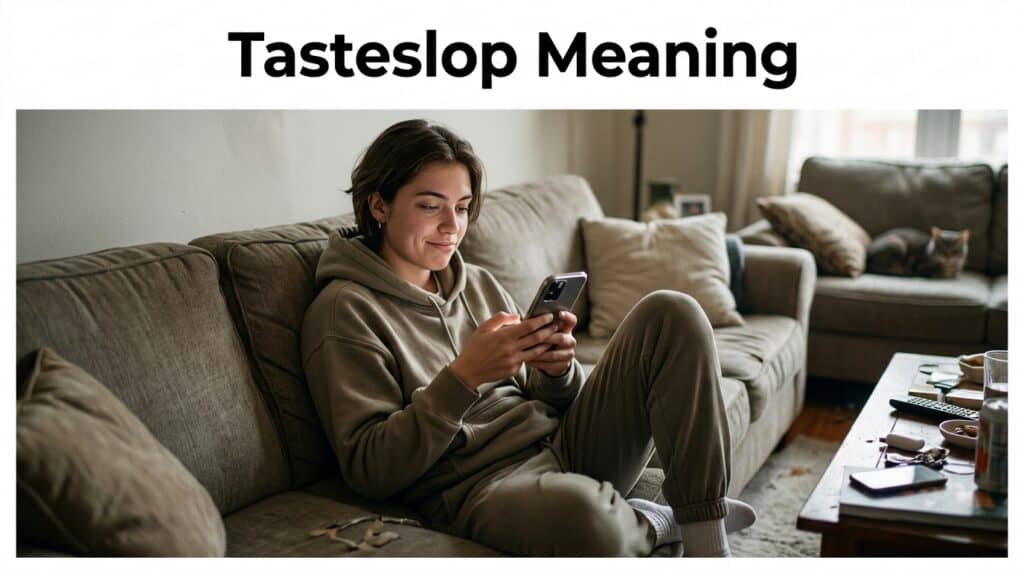
Your feed is flooded with hyper-aesthetic AI images of “minimalist” apartments, “perfect” lattes, and “curated” outfits that all look beautiful but feel completely soulless. Cambridge Dictionary has a name for it now: tasteslop. Let’s dive into what the term means and why it was just added in July 2026.
What Does “Tasteslop” Mean?
Quick answer: “Tasteslop” is AI-generated content — images of clothes, objects, or interior design — that is designed to look tasteful and stylish but is actually bland and unoriginal. It was added to Cambridge Dictionary in July 2026 as a new word describing soulless, algorithm-pleasing aesthetics.
Full Definition
Tasteslop is AI-generated content, such as images of clothes, objects, or interior design, that is designed to look tasteful and stylish but is actually bland and unoriginal. It’s the visual equivalent of elevator music — pleasant but forgettable.
Common Contexts
You’ll see “tasteslop” used to describe AI-generated Pinterest boards, Instagram aesthetics, interior design renders, fashion mockups, and lifestyle content that looks polished but lacks any real personality or creative risk.
Alternate Spellings
Written as “tasteslop,” sometimes hyphenated as “taste-slop.” Occasionally paired with “AI slop” as a more specific subset.
How It’s Pronounced
Pronounced exactly as it’s spelled — “tayst-slop” (UK: /ˈteɪst.slɒp/, US: /ˈteɪst.slɑːp/), two syllables.
Typical Tone
Almost always dismissive and critical — it’s a callout term for bland, algorithm-chasing content, rarely used neutrally or positively.
Origin and Evolution
When It Became Popular
The term was officially added to Cambridge Dictionary on July 27, 2026, as part of a batch of new words related to AI and internet trends. It builds on the broader “slop” terminology that Merriam-Webster named their 2025 Word of the Year, applying it specifically to aesthetics and design.
Platforms or Subcultures
It spread through design communities, art criticism spaces, and social media platforms like Instagram, Pinterest, and TikTok where AI-generated aesthetic content is common. It’s also heavily used in tech and AI ethics discussions about the homogenization of creative output.
How It Evolved Over Time
What started as a niche critique within design and AI ethics circles has become mainstream vocabulary for describing the flood of soulless, algorithm-optimized content across every visual platform. Cambridge Dictionary’s official addition cemented it as the go-to term for bland AI aesthetics.
Modern Usage and Examples
Sincere (critical)
“This whole Pinterest board is just tasteslop — every room looks the same.”
Sarcastic
“Oh wow, another AI-generated latte art post. Peak tasteslop.”
Self-aware
“I know this outfit render is tasteslop but the algorithm loves it so here we are.”
Describing the behavior
“My entire feed is just tasteslop at this point — nothing with any actual personality.”
Who Uses It?
Tasteslop” is used by designers, artists, tech commentators, and everyday social media users frustrated by homogenized AI content on Instagram, Pinterest, TikTok, and design blogs. It’s especially common in AI ethics and creative industry discussions about the impact of generative AI on originality.
Example Sentences
“That interior design render is pure tasteslop — looks nice but I’ve seen it a thousand times.”
“My Pinterest recommendations are all tasteslop now, nothing with any actual style.”
“The whole brand’s aesthetic is just AI tasteslop, zero originality.”
Similar Slang Terms
- AI slop – the broader term for low-quality AI-generated content, of which tasteslop is a specific subset focused on aesthetics.
- Brain rot – the mental fog associated with consuming too much low-quality content, often tasteslop itself.
- Algorithm bait – content designed purely to please recommendation algorithms rather than human audiences.
- Beige aesthetic – describes the same bland, inoffensive visual style that tasteslop embodies.
- Soulless – the classic, non-slang way of describing the same lack of personality or creative risk.
Pop Culture, Memes, and Trends
Memes
“Tasteslop” memes often feature side-by-side comparisons of AI-generated “perfect” interiors vs. real, messy human spaces captioned “tasteslop vs. actual taste.”
TikTok Trends
Creators film “spotting the tasteslop” videos, picking apart telltale signs of AI-generated design content like impossible furniture angles, nonsensical object placements, or hyper-polished but generic aesthetics.
Celebrity Content
Several designers and artists have publicly called out tasteslop tactics in brand marketing and influencer content, with entire threads dedicated to analyzing the ethics of AI-generated aesthetics.
Twitter/X Jokes or Instagram Captions
On X, “tasteslop” frequently appears in replies to obviously AI-generated design posts, often with comments like “this is peak tasteslop” or “the algorithm ate and left no crumbs (of originality).
Is “Tasteslop” Safe to Use?
Yes, it’s completely casual and non-offensive as a critique of content quality and aesthetic homogenization. It’s widely used in professional design and tech journalism and casual conversation alike, though it can come across as dismissive if aimed at someone’s genuine creative work rather than obvious AI-generated blandness.
Why It’s Popular
“Tasteslop” resonates because it names a problem millions of people feel daily — the sense that online aesthetics are increasingly designed to please algorithms rather than express genuine human creativity. Cambridge Dictionary’s decision to add it in July 2026 cemented it as the go-to term for bland AI aesthetics, reflecting how central this frustration has become to the modern internet experience.
So next time your feed serves up something a little too polished and a little too empty, just remember: you’re probably looking at tasteslop. Keep exploring the world of slang, and who knows what other gems you’ll uncover!
Frequently Asked Questions
What does “tasteslop” actually mean?
It’s AI-generated content — images of clothes, objects, or interior design — that is designed to look tasteful and stylish but is actually bland and unoriginal. It was added to Cambridge Dictionary in July 2026 as a new word describing soulless, algorithm-pleasing aesthetics.
Where did “tasteslop” come from?
The term was officially added to Cambridge Dictionary on July 27, 2026, as part of a batch of new words related to AI and internet trends. It builds on the broader “slop” terminology that Merriam-Webster named their 2025 Word of the Year, applying it specifically to aesthetics and design.
How is “tasteslop” different from “AI slop”?
“AI slop” is the broader term for any low-quality AI-generated content, while “tasteslop” is a specific subset focused on aesthetics and design — content that looks tasteful and stylish but is actually bland and unoriginal.
Why did Cambridge Dictionary add “tasteslop”?
Cambridge Dictionary added “tasteslop” because it reflects a growing frustration with homogenized, algorithm-optimized AI content flooding visual platforms like Instagram, Pinterest, and TikTok. It’s become the go-to term for describing soulless, AI-generated aesthetics.