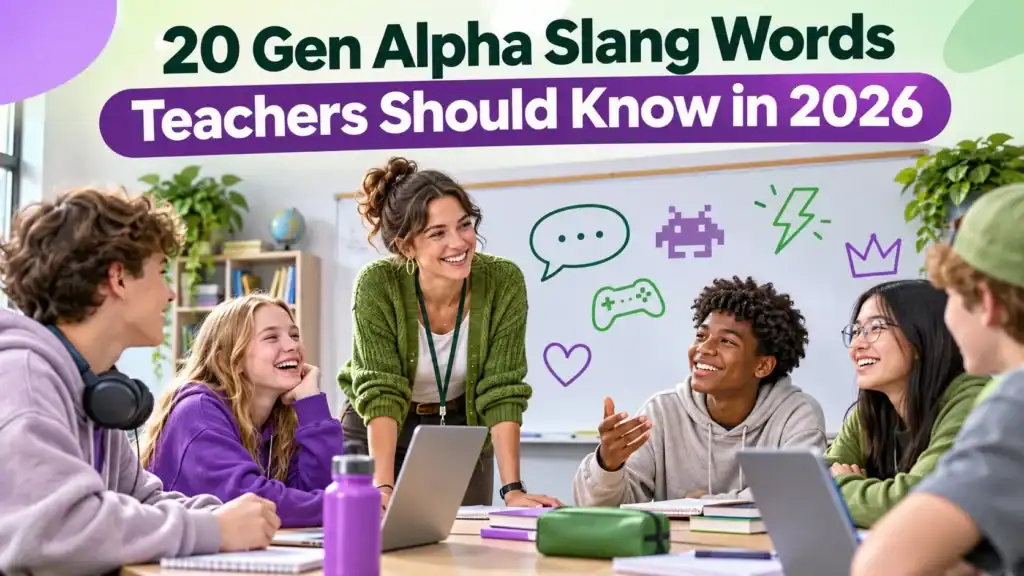
When students call a classmate “an NPC,” shout “six-seven,” or say they need to “lock in,” understanding the words can make classroom management easier. This guide explains 20 expressions heard in online youth culture and how teachers can respond proportionately.
Quick answer: A slang word is not automatically misconduct. Focus on its effect: disruption, repeated targeting, threats, humiliation, or interference with learning. Many expressions also have older meanings or origins outside Gen Alpha.
At a glance: 20 expressions and what they mean
| Expression | Plain-English meaning | What to notice |
|---|---|---|
| 6-7 | A mostly nonsensical chant or reaction, often accompanied by a hand motion. | Usually playful; repeated interruptions can be disruptive. |
| Locked in | Highly focused or committed to a task. | Often encouraging; context distinguishes it from literal confinement. |
| Crash out | Lose emotional control or act recklessly in frustration. | May be exaggeration, but repeated distress merits attention. |
| Glazing | Excessively praising or flattering someone. | Can be playful or a way to shame genuine praise. |
| Chopped | Unattractive, poorly styled, or messed up. | Potentially hurtful when directed at a person. |
| NPC | Non-player character; online, someone seen as robotic or unoriginal. | Can dehumanize classmates when used as a label. |
| Chud | An insult meaning an unpleasant jerk or troll; sometimes political. | An insult, not a neutral descriptor. |
| No cap | No lie; an assurance that someone is serious. | Usually harmless; “cap” means a lie. |
| Mid | Average or disappointing. | Criticism of a thing is different from insulting a person. |
| Unc | An older person or someone acting out of touch. | Often teasing, but can be disrespectful. |
| Mogging | Outshining another person, often in appearance. | Appearance comparisons can become unkind. |
| Aura | A person’s perceived coolness, presence or vibe. | Usually joking; ranking peers can feel exclusionary. |
| Sigma | A self-reliant, supposedly cool person; frequently used ironically. | Can be a meme; some uses borrow from rigid masculinity hierarchies. |
| Rizz | Charisma, especially confidence or charm when flirting. | Mostly harmless; do not assume every use is sexual. |
| Fanum tax | Taking a bite of someone else’s food, often as a joke. | Food-sharing jokes still require consent. |
| Skibidi | An absurd meme word associated with the Skibidi Toilet videos. | Usually nonsense humor; ask for context. |
| Clanker | A derogatory or joking name for robots and AI systems. | Usually about machines; may echo exclusionary language in some contexts. |
| Lore | A person’s backstory or a collection of stories and inside jokes. | Usually harmless; respect privacy around personal stories. |
| Delulu | Delusional, often jokingly optimistic or unrealistic. | Usually self-mocking; avoid using it to dismiss genuine concerns. |
| Bop | Can mean a catchy song, but also a sexualized insult for a person. | Potential bullying and slut-shaming; context matters. |
A note on origins: This list reflects widely discussed 2026 usage, not a claim that Gen Alpha invented these terms. Several have earlier roots in African American English, gaming, meme culture or other communities. Meanings and popularity vary.
1. What does “6-7” mean?
A mostly nonsensical chant or reaction, often accompanied by a hand motion. The meaning is shaped by the conversation and may shift between friend groups, games, short videos and school. Avoid treating a single definition as universal.
Example: Someone says “six-seven” when the number appears in class.
Context and tone: Usually playful; repeated interruptions can be disruptive. In class, respond to the conduct rather than punishing the vocabulary alone. A quiet check-in is often more useful than a public confrontation.
A practical response is to ask whether the expression was directed at a person or simply used as a reaction. If it targets a student, apply the same respectful-language expectations you would use for a conventional insult.
Read the 6-7 meaning guide for additional examples and related usage.
2. What does “Locked in” mean?
Highly focused or committed to a task. The meaning is shaped by the conversation and may shift between friend groups, games, short videos and school. Avoid treating a single definition as universal.
Example: “I’m locked in for finals.”
Context and tone: Often encouraging; context distinguishes it from literal confinement. In class, respond to the conduct rather than punishing the vocabulary alone. A quiet check-in is often more useful than a public confrontation.
A practical response is to ask whether the expression was directed at a person or simply used as a reaction. If it targets a student, apply the same respectful-language expectations you would use for a conventional insult.
Read the Locked in meaning guide for additional examples and related usage.
3. What does “Crash out” mean?
Lose emotional control or act recklessly in frustration. The meaning is shaped by the conversation and may shift between friend groups, games, short videos and school. Avoid treating a single definition as universal.
Example: “I’m about to crash out over this game.”
Context and tone: May be exaggeration, but repeated distress merits attention. In class, respond to the conduct rather than punishing the vocabulary alone. A quiet check-in is often more useful than a public confrontation.
A practical response is to ask whether the expression was directed at a person or simply used as a reaction. If it targets a student, apply the same respectful-language expectations you would use for a conventional insult.
Read the Crash out meaning guide for additional examples and related usage.
4. What does “Glazing” mean?
Excessively praising or flattering someone. The meaning is shaped by the conversation and may shift between friend groups, games, short videos and school. Avoid treating a single definition as universal.
Example: “Stop glazing the coach.”
Context and tone: Can be playful or a way to shame genuine praise. In class, respond to the conduct rather than punishing the vocabulary alone. A quiet check-in is often more useful than a public confrontation.
A practical response is to ask whether the expression was directed at a person or simply used as a reaction. If it targets a student, apply the same respectful-language expectations you would use for a conventional insult.
Read the Glazing meaning guide for additional examples and related usage.
5. What does “Chopped” mean?
Unattractive, poorly styled, or messed up. The meaning is shaped by the conversation and may shift between friend groups, games, short videos and school. Avoid treating a single definition as universal.
Example: “They called my haircut chopped.”
Context and tone: Potentially hurtful when directed at a person. In class, respond to the conduct rather than punishing the vocabulary alone. A quiet check-in is often more useful than a public confrontation.
A practical response is to ask whether the expression was directed at a person or simply used as a reaction. If it targets a student, apply the same respectful-language expectations you would use for a conventional insult.
Read the Chopped meaning guide for additional examples and related usage.
6. What does “NPC” mean?
Non-player character; online, someone seen as robotic or unoriginal. The meaning is shaped by the conversation and may shift between friend groups, games, short videos and school. Avoid treating a single definition as universal.
Example: “He’s acting like an NPC.”
Context and tone: Can dehumanize classmates when used as a label. In class, respond to the conduct rather than punishing the vocabulary alone. A quiet check-in is often more useful than a public confrontation.
A practical response is to ask whether the expression was directed at a person or simply used as a reaction. If it targets a student, apply the same respectful-language expectations you would use for a conventional insult.
Read the NPC meaning guide for additional examples and related usage.
7. What does “Chud” mean?
An insult meaning an unpleasant jerk or troll; sometimes political. The meaning is shaped by the conversation and may shift between friend groups, games, short videos and school. Avoid treating a single definition as universal.
Example: “Don’t be a chud in the comments.”
Context and tone: An insult, not a neutral descriptor. In class, respond to the conduct rather than punishing the vocabulary alone. A quiet check-in is often more useful than a public confrontation.
A practical response is to ask whether the expression was directed at a person or simply used as a reaction. If it targets a student, apply the same respectful-language expectations you would use for a conventional insult.
Full definition coming soon; this guide provides the essential context meanwhile.
8. What does “No cap” mean?
No lie; an assurance that someone is serious. The meaning is shaped by the conversation and may shift between friend groups, games, short videos and school. Avoid treating a single definition as universal.
Example: “That test was hard, no cap.”
Context and tone: Usually harmless; “cap” means a lie. In class, respond to the conduct rather than punishing the vocabulary alone. A quiet check-in is often more useful than a public confrontation.
A practical response is to ask whether the expression was directed at a person or simply used as a reaction. If it targets a student, apply the same respectful-language expectations you would use for a conventional insult.
For this expression, check the context and example above; a dedicated Slangspace definition is not currently linked.
9. What does “Mid” mean?
Average or disappointing. The meaning is shaped by the conversation and may shift between friend groups, games, short videos and school. Avoid treating a single definition as universal.
Example: “The movie was mid.”
Context and tone: Criticism of a thing is different from insulting a person. In class, respond to the conduct rather than punishing the vocabulary alone. A quiet check-in is often more useful than a public confrontation.
A practical response is to ask whether the expression was directed at a person or simply used as a reaction. If it targets a student, apply the same respectful-language expectations you would use for a conventional insult.
Read the Mid meaning guide for additional examples and related usage.
10. What does “Unc” mean?
An older person or someone acting out of touch. The meaning is shaped by the conversation and may shift between friend groups, games, short videos and school. Avoid treating a single definition as universal.
Example: “You don’t know that meme? Unc!”
Context and tone: Often teasing, but can be disrespectful. In class, respond to the conduct rather than punishing the vocabulary alone. A quiet check-in is often more useful than a public confrontation.
A practical response is to ask whether the expression was directed at a person or simply used as a reaction. If it targets a student, apply the same respectful-language expectations you would use for a conventional insult.
Read the Unc meaning guide for additional examples and related usage.
11. What does “Mogging” mean?
Outshining another person, often in appearance. The meaning is shaped by the conversation and may shift between friend groups, games, short videos and school. Avoid treating a single definition as universal.
Example: “He mogged everyone in the photo.”
Context and tone: Appearance comparisons can become unkind. In class, respond to the conduct rather than punishing the vocabulary alone. A quiet check-in is often more useful than a public confrontation.
A practical response is to ask whether the expression was directed at a person or simply used as a reaction. If it targets a student, apply the same respectful-language expectations you would use for a conventional insult.
Read the Mogging meaning guide for additional examples and related usage.
12. What does “Aura” mean?
A person’s perceived coolness, presence or vibe. The meaning is shaped by the conversation and may shift between friend groups, games, short videos and school. Avoid treating a single definition as universal.
Example: “That entrance earned aura points.”
Context and tone: Usually joking; ranking peers can feel exclusionary. In class, respond to the conduct rather than punishing the vocabulary alone. A quiet check-in is often more useful than a public confrontation.
A practical response is to ask whether the expression was directed at a person or simply used as a reaction. If it targets a student, apply the same respectful-language expectations you would use for a conventional insult.
For this expression, check the context and example above; a dedicated Slangspace definition is not currently linked.
13. What does “Sigma” mean?
A self-reliant, supposedly cool person; frequently used ironically. The meaning is shaped by the conversation and may shift between friend groups, games, short videos and school. Avoid treating a single definition as universal.
Example: “That was sigma” praises an independent move, sometimes as a joke.
Context and tone: Can be a meme; some uses borrow from rigid masculinity hierarchies. In class, respond to the conduct rather than punishing the vocabulary alone. A quiet check-in is often more useful than a public confrontation.
A practical response is to ask whether the expression was directed at a person or simply used as a reaction. If it targets a student, apply the same respectful-language expectations you would use for a conventional insult.
Read the Sigma meaning guide for additional examples and related usage.
14. What does “Rizz” mean?
Charisma, especially confidence or charm when flirting. The meaning is shaped by the conversation and may shift between friend groups, games, short videos and school. Avoid treating a single definition as universal.
Example: “He has rizz” means he comes across as charming.
Context and tone: Mostly harmless; do not assume every use is sexual. In class, respond to the conduct rather than punishing the vocabulary alone. A quiet check-in is often more useful than a public confrontation.
A practical response is to ask whether the expression was directed at a person or simply used as a reaction. If it targets a student, apply the same respectful-language expectations you would use for a conventional insult.
Read the Rizz meaning guide for additional examples and related usage.
15. What does “Fanum tax” mean?
Taking a bite of someone else’s food, often as a joke. The meaning is shaped by the conversation and may shift between friend groups, games, short videos and school. Avoid treating a single definition as universal.
Example: “You owe me Fanum tax” before grabbing a fry.
Context and tone: Food-sharing jokes still require consent. In class, respond to the conduct rather than punishing the vocabulary alone. A quiet check-in is often more useful than a public confrontation.
A practical response is to ask whether the expression was directed at a person or simply used as a reaction. If it targets a student, apply the same respectful-language expectations you would use for a conventional insult.
Read the Fanum tax meaning guide for additional examples and related usage.
16. What does “Skibidi” mean?
An absurd meme word associated with the Skibidi Toilet videos. The meaning is shaped by the conversation and may shift between friend groups, games, short videos and school. Avoid treating a single definition as universal.
Example: “That’s so skibidi” may have no stable meaning.
Context and tone: Usually nonsense humor; ask for context. In class, respond to the conduct rather than punishing the vocabulary alone. A quiet check-in is often more useful than a public confrontation.
A practical response is to ask whether the expression was directed at a person or simply used as a reaction. If it targets a student, apply the same respectful-language expectations you would use for a conventional insult.
Read the Skibidi meaning guide for additional examples and related usage.
17. What does “Clanker” mean?
A derogatory or joking name for robots and AI systems. The meaning is shaped by the conversation and may shift between friend groups, games, short videos and school. Avoid treating a single definition as universal.
Example: “The chatbot got it wrong—what a clanker.”
Context and tone: Usually about machines; may echo exclusionary language in some contexts. In class, respond to the conduct rather than punishing the vocabulary alone. A quiet check-in is often more useful than a public confrontation.
A practical response is to ask whether the expression was directed at a person or simply used as a reaction. If it targets a student, apply the same respectful-language expectations you would use for a conventional insult.
Read the Clanker meaning guide for additional examples and related usage.
18. What does “Lore” mean?
A person’s backstory or a collection of stories and inside jokes. The meaning is shaped by the conversation and may shift between friend groups, games, short videos and school. Avoid treating a single definition as universal.
Example: “Wait, what’s the lore behind that nickname?”
Context and tone: Usually harmless; respect privacy around personal stories. In class, respond to the conduct rather than punishing the vocabulary alone. A quiet check-in is often more useful than a public confrontation.
A practical response is to ask whether the expression was directed at a person or simply used as a reaction. If it targets a student, apply the same respectful-language expectations you would use for a conventional insult.
Full definition coming soon; this guide provides the essential context meanwhile.
19. What does “Delulu” mean?
Delusional, often jokingly optimistic or unrealistic. The meaning is shaped by the conversation and may shift between friend groups, games, short videos and school. Avoid treating a single definition as universal.
Example: “I’m delulu if I think I’ll meet the singer.”
Context and tone: Usually self-mocking; avoid using it to dismiss genuine concerns. In class, respond to the conduct rather than punishing the vocabulary alone. A quiet check-in is often more useful than a public confrontation.
A practical response is to ask whether the expression was directed at a person or simply used as a reaction. If it targets a student, apply the same respectful-language expectations you would use for a conventional insult.
Read the Delulu meaning guide for additional examples and related usage.
20. What does “Bop” mean?
Can mean a catchy song, but also a sexualized insult for a person. The meaning is shaped by the conversation and may shift between friend groups, games, short videos and school. Avoid treating a single definition as universal.
Example: “They called her a bop online.”
Context and tone: Potential bullying and slut-shaming; context matters. In class, respond to the conduct rather than punishing the vocabulary alone. A quiet check-in is often more useful than a public confrontation.
A practical response is to ask whether the expression was directed at a person or simply used as a reaction. If it targets a student, apply the same respectful-language expectations you would use for a conventional insult.
Read the Bop meaning guide for additional examples and related usage.
A practical classroom response framework
1. Clarify. Ask what the expression means in that moment. 2. Observe impact. Is it a harmless reaction, a repeated interruption, or a put-down aimed at a peer? 3. Respond consistently. Apply existing norms on respect, attention and bullying without creating a special rule against unfamiliar words. 4. Follow up privately. If a student appears upset or singled out, check in rather than making them explain in front of the class.
Examples teachers can use
If a student shouts “6-7” during a math problem, redirect the interruption and return to the lesson; the phrase itself is usually nonsense. If someone calls a classmate “chopped,” address the appearance-based insult. If a student says “I’m locked in,” acknowledge the positive focus. If “NPC” becomes a repeated nickname for a student, treat it as a potential exclusionary pattern.
Share consistent guidance with families when a trend causes repeated disruption. The goal is not to ban evolving language but to preserve a respectful learning environment.
Frequently asked questions
Should teachers ban Gen Alpha slang?
Usually not as a category. Clear rules about respectful speech and interruptions are easier to apply fairly.
What if a word has several meanings?
Ask for the sentence and audience. “Bop,” for example, may refer to music or be a derogatory label for a person.
Which words require extra attention?
Repeated appearance insults, sexualized labels and dehumanizing nicknames warrant more attention than nonsensical chants.
Does every student use these terms?
No. Usage varies by age, community, region, platform and peer group.
Related Slangspace guides
Explore our teen slang overview and emoji slang guide. The definitions above link to individual entries where available.
Editorial note: Slang meanings are context-dependent. This guide was prepared in November 2026 and should be reviewed as usage changes.