Someone mentions “vibe hacking” in a tech article or design thread and you’re left wondering if it’s about manipulating moods or actually hacking computers. Turns out it’s both — sort of. Let’s break down what “vibe hacking” actually means in 2026.
What Does “Vibe Hacking” Mean?
Quick answer: “Vibe hacking” has two distinct meanings in 2026: (1) the covert manipulation of AI coding assistants by modifying their local instruction files, and (2) the broader practice of manipulating emotional states or atmospheres through content, design, or environmental changes. It was added to Cambridge Dictionary in July 2026.
Full Definition
In enterprise AI security, vibe hacking refers to an attack in which an adversary covertly modifies the local markdown instruction files that AI coding assistants read to understand a developer’s project context. In broader internet culture, it describes manipulating emotional states or atmospheres through content, design, or environmental changes.
Common Contexts
You’ll see “vibe hacking” used in tech security articles about AI coding tools, design discussions about mood manipulation through aesthetics, and social media threads about influencing group dynamics or personal emotional states.
Alternate Spellings
Written as “vibe hacking,” sometimes hyphenated as “vibe-hacking.” Occasionally paired with “mood hacking” or “atmosphere engineering” in broader contexts.
How It’s Pronounced
Pronounced exactly as it’s spelled — “vybe hak-ing,” two syllables for “vibe,” one for “hacking.”
Typical Tone
In tech contexts: serious and cautionary (describing a security vulnerability). In broader culture: can range from neutral description to critical callout for manipulative practices.
Origin and Evolution
When It Became Popular
The term was officially added to Cambridge Dictionary on July 27, 2026, as part of a batch of new words related to AI and internet trends. The enterprise AI security definition was documented by Akamai in August 2026, describing attacks targeting AI coding assistants like Cursor or GitHub Copilot.
Platforms or Subcultures
It spread through tech security communities, AI developer forums, and design/discussion spaces where mood manipulation through content is frequently analyzed. It’s also heavily used in enterprise AI security reports and discussions about AI tool vulnerabilities.
How It Evolved Over Time
What started as a niche term in AI security and design criticism has become mainstream vocabulary for describing both technical attacks on AI tools and broader cultural practices of emotional/atmospheric manipulation. Cambridge Dictionary’s official addition cemented it as the go-to term for both contexts.
Modern Usage and Examples
Technical (AI security)
“The attacker used vibe hacking to inject malicious instructions into the AI coding assistant’s config files.”
Design/cultural
“This whole brand’s aesthetic is just vibe hacking — they’re manipulating your mood through colors and fonts.”
Social dynamics
“She’s a master at vibe hacking — she can shift the whole room’s energy with one comment.”
Self-aware
“I know I’m vibe hacking my own playlist but I need to get through this workday somehow.”
Who Uses It?
“Vibe hacking” is used by AI developers, tech security professionals, designers, content creators, and everyday social media users discussing mood manipulation or AI tool vulnerabilities on Twitter/X, tech blogs, design forums, and AI ethics spaces.
Example Sentences
“Akamai’s latest report documents vibe hacking as a new attack class targeting AI coding tools.”
“This whole cafe is vibe hacking with their lighting and music — I can’t focus on anything else.”
“The marketing team is basically vibe hacking the entire campaign through color psychology.”
Similar Slang Terms
- AI slop – low-quality AI-generated content, often discussed alongside vibe hacking in AI ethics contexts.
- Tasteslop – bland AI-generated aesthetic content, another July 2026 Cambridge addition related to AI content quality.
- CursorJacking – a related AI security term for manipulating AI coding assistants through UI/UX tricks.
- Mood hacking – the broader practice of manipulating emotional states, overlapping with vibe hacking in cultural contexts.
- Atmosphere engineering – describes the same intentional manipulation of environmental or social vibes.
Pop Culture, Memes, and Trends
Memes
“Vibe hacking” memes often feature screenshots of AI coding tools with captions like “when the AI assistant gets vibe hacked into writing insecure code” or “me vibe hacking my own playlist to survive Monday.”
TikTok Trends
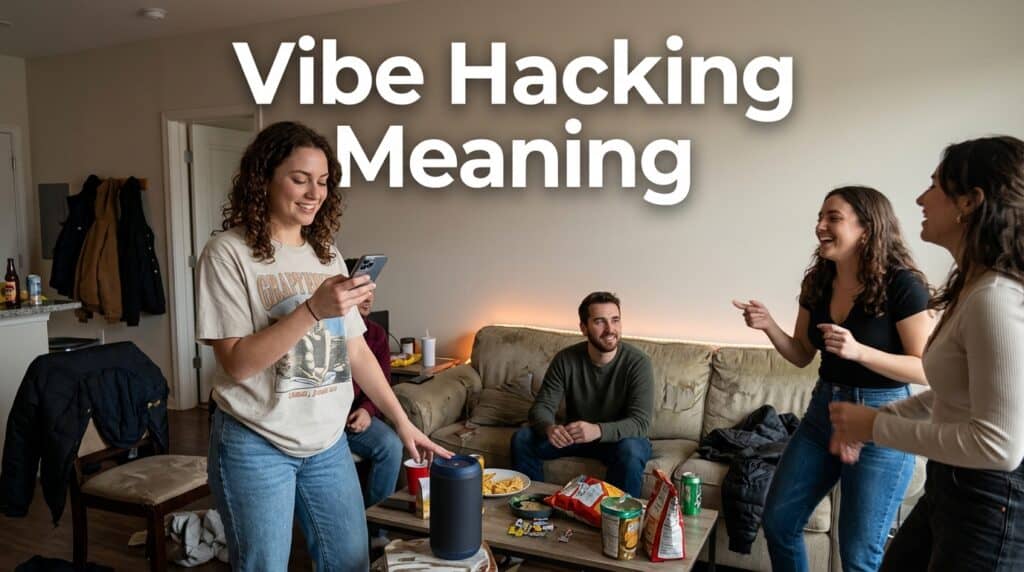
Creators film “vibe hacking your space” videos, showing how lighting, music, and decor changes can shift a room’s entire atmosphere — often framed as self-care or productivity hacks.
Celebrity Content
Several tech journalists and AI researchers have publicly discussed vibe hacking in articles and videos about AI security vulnerabilities, helping normalize the term in mainstream tech coverage.
Twitter/X Jokes or Instagram Captions
On X, “vibe hacking” frequently appears in tech security threads and design discussions, often with comments like “this is classic vibe hacking” or “they’re vibe hacking the entire userbase.”
Is “Vibe Hacking” Safe to Use?
Yes, it’s completely casual and non-offensive as a descriptive term for both AI security vulnerabilities and cultural mood manipulation practices. It’s widely used in professional tech journalism, design criticism, and casual conversation alike, though it can come across as technical jargon in non-tech contexts.
Why It’s Popular
“Vibe hacking” resonates because it names two distinct but related problems people feel daily — the technical vulnerability of AI tools to covert manipulation, and the broader cultural sense that our emotional states and environments are increasingly engineered for specific responses. Cambridge Dictionary’s decision to add it in July 2026 cemented it as the go-to term for both contexts.
So next time your AI coding assistant starts acting weird or your mood shifts after walking into a carefully designed space, just remember: you might be experiencing vibe hacking. Keep exploring the world of slang, and who knows what other gems you’ll uncover!
Frequently Asked Questions
What does “vibe hacking” actually mean?
It has two distinct meanings: (1) in enterprise AI security, it refers to covertly modifying the local instruction files that AI coding assistants read to understand project context, potentially causing them to generate insecure code or execute unauthorized actions; (2) in broader culture, it describes manipulating emotional states or atmospheres through content, design, or environmental changes.
Where did “vibe hacking” come from?
The term was officially added to Cambridge Dictionary on July 27, 2026, as part of a batch of new words related to AI and internet trends. The enterprise AI security definition was documented by Akamai in August 2026, describing attacks targeting AI coding assistants like Cursor or GitHub Copilot.
Is vibe hacking dangerous?
In the AI security context, yes — it can cause AI coding tools to generate insecure code, call unauthorized external services, or execute actions outside their intended scope. In the broader cultural context, it’s more about intentional mood/atmosphere manipulation, which can be neutral, positive, or negative depending on intent and context.
How can you protect against vibe hacking in AI tools?
Monitor and version-control your local markdown instruction files, review AI-generated code for unexpected patterns or external service calls, and limit AI tool access to only necessary project files and repositories.